If you're searching "how to sell AI agents," you probably don't need another definition of what an agent is. You've already built one (or you're about to), and now you want to know one thing:
How do I turn this into real money?
That means answering the questions that actually matter:
This guide exists because of a hard truth: nobody buys "an AI agent." They buy a solved problem with a measurable win.
And the timing for selling agents has never been better or more precarious. McKinsey's 2025 survey reports that 88% of organizations now use AI in at least one business function (up from 78% the prior year). Adoption is broad.
But the uncomfortable part? Gartner predicts that over 40% of agentic AI projects will be canceled by the end of 2027 due to escalating costs, unclear value, or inadequate risk controls.
So if you're going to sell agents successfully, you need to do it the way the winners do: outcomes-first, with tight packaging, value-aligned pricing, and distribution that doesn't depend on vibes.
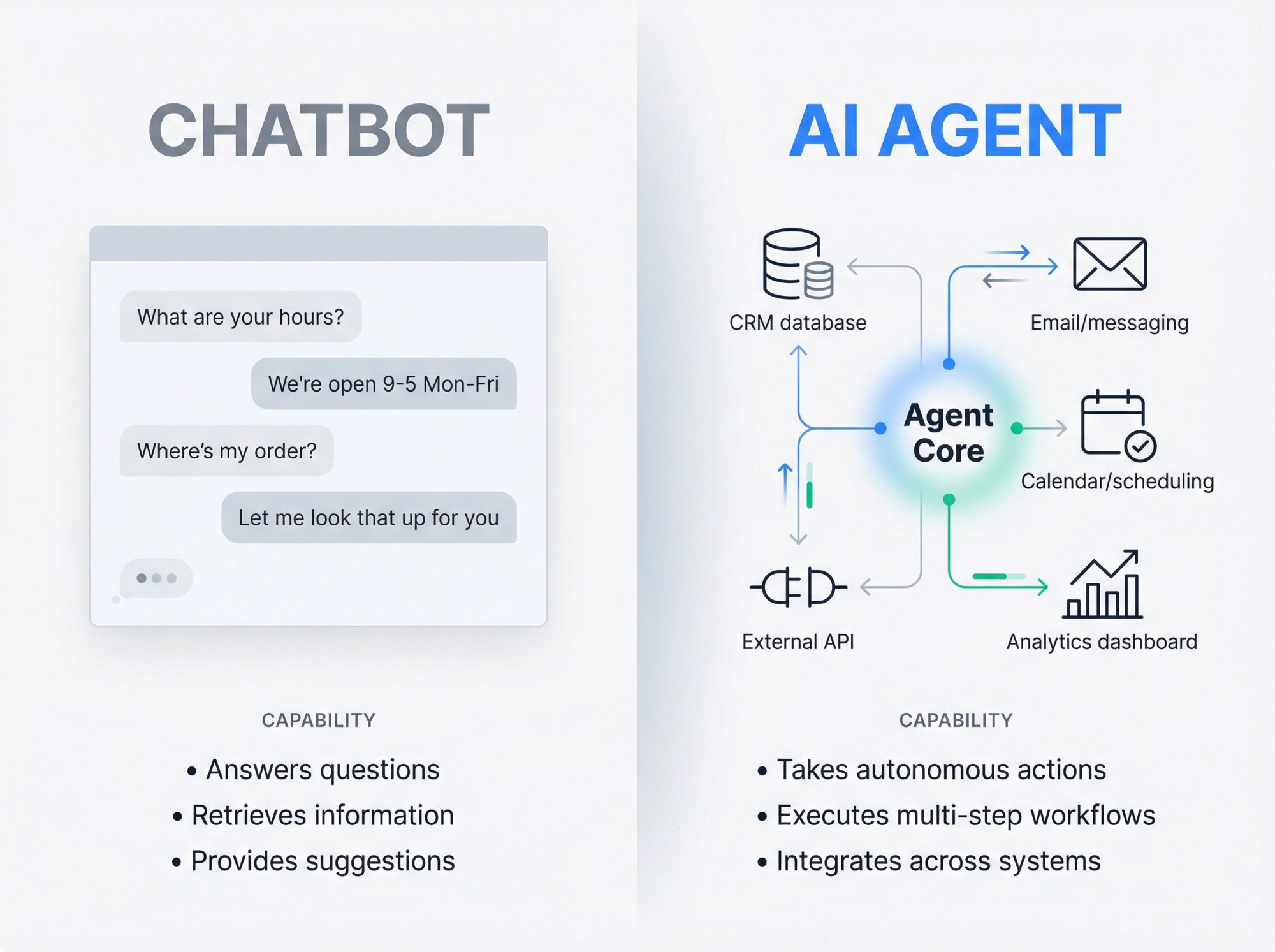
A chatbot answers questions. An agent takes actions across systems to complete a goal end-to-end. Understanding this distinction is crucial if you want to build an AI assistant that people actually pay for.
That "takes action" part is exactly why agents are valuable. It's also why they're risky. Your buyer is thinking: